ONE PROCESS, RUN THE SAME WAY, EVERY HIRE
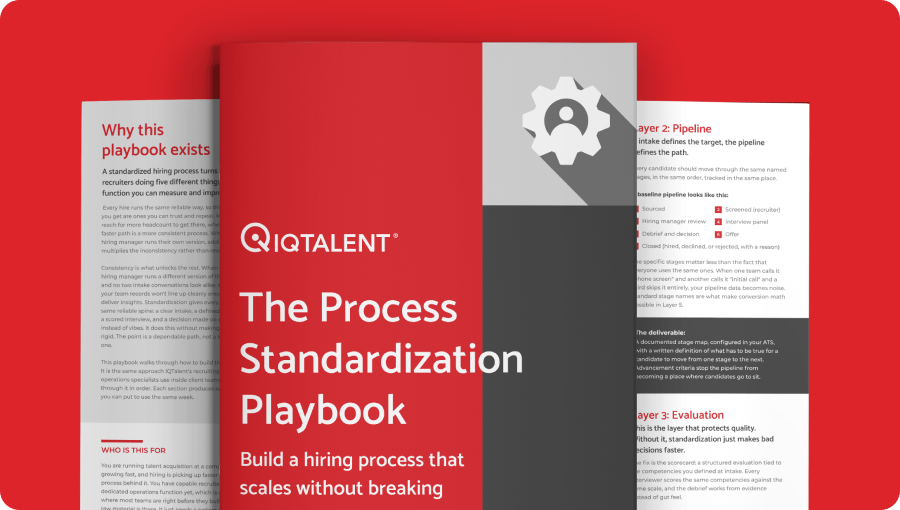
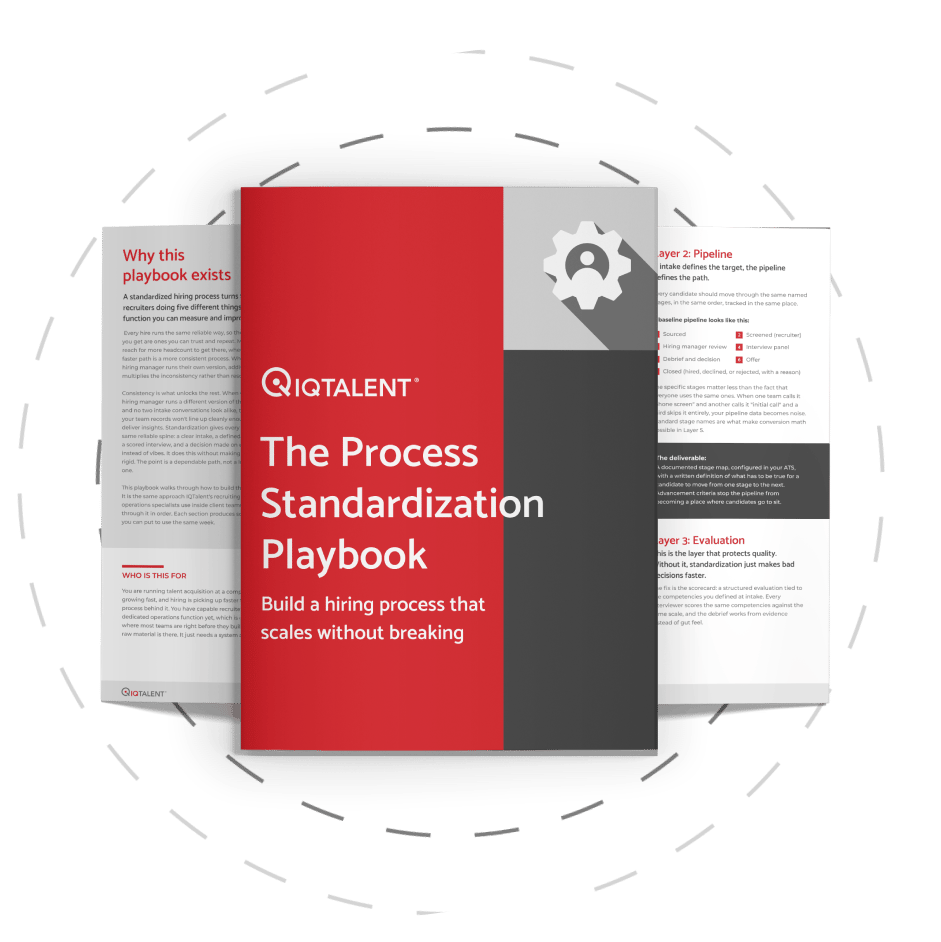
The Process Standardization Playbook
Build a hiring process that scales without breaking
A standardized hiring process turns five recruiters doing five different things into one function you can measure and improve. Every hire runs the same reliable way, so the results you get are ones you can trust and repeat.
This playbook walks you through the five layers that make that possible: intake, pipeline, evaluation, data, and reporting. It is the same approach IQTalent's recruiting operations specialists use inside client teams, sequenced across 90 days so you can build it while your pipeline stays live.
What's inside:
-
Five build-ready layers with a named deliverable for each one, so every section produces something you can put to use the same week
-
Templates and standards covering intake, stage maps, scorecards, and data hygiene, ready to adapt to your ATS
A 90-day rollout sequence that phases the work into a live hiring function instead of freezing it -
The metrics that follow once the foundation holds, from time-to-fill to recruiter load
Download the Playbook
WHAT'S INSIDE
The Five Layers of a Standardized Process

Start With Intake
- A one-page intake template every recruiter completes with every hiring manager, every time
- Must-have versus nice-to-have skills separated on purpose, before sourcing begins
- What "great" looks like at 90 days, in the hiring manager's own words
- Panel ownership, target start date, and a confirmed comp range up front

Define The Pipeline
- A baseline seven-stage map from sourced to closed, with reasons captured on every close
- Written advancement criteria so candidates move on evidence, not inertia
- Standard stage names configured in your ATS, which is what makes conversion math possible later
- One shared vocabulary across every team and every region you hire in
.png?width=72&height=72&name=IQTalent%20-%20Icon%20Board%20(3).png "IQTalent - Icon Board (3)")
Protect Quality With Evaluation
- One scorecard template per role type, tied to the competencies set at intake
- A rating scale built to force a lean either way, plus a required evidence note behind every score
- A single recommendation per interviewer: advance, hold, or pass
- The rule that makes debriefs work: no score submitted, no seat at the table
Make the Data Trustworthy
- The recurring ATS issues worth fixing first, from free-form location fields to silent integration gaps
- A short written data hygiene standard covering naming conventions, required fields, and reported taxonomies
- A monthly audit cadence so the cleanup you do once does not quietly decay
- Clean inputs before dashboards, so leadership trusts the numbers the first time

Turn Reporting Into A Byproduct
- The five metrics worth standardizing first, including pipeline conversion and recruiter load
- A recurring report simple enough that leadership reads it and acts on it
- SOPs your internal team can run without outside support
- A 90-day sequence that ends in handoff, so the process outlives the engagement
Six Reasons to Standardize Before You Scale Before You Hire
Standardization compounds faster than headcount. Adding recruiters to an inconsistent process multiplies the inconsistency. Adding consistency first makes every recruiter you already have more productive.
Your data becomes usable. When two teams name the same stage differently, pipeline reporting turns into guesswork. Shared stage names and required fields are what let you see where candidates stall.
Hiring managers get time back. Resistance to process fades when the intake conversation replaces four rounds of clarifying email. Lead with the hours it saves them, and adoption follows.
Quality holds under speed. Scorecards keep compressed timelines from turning into rushed decisions. Structured evaluation is what lets you move fast without trading away the hire.
It travels across markets. One documented process scales into new geographies, including the UK, without rebuilding from scratch each time you open a region.
It survives the handoff. A process that depends on one person is centralized, not standardized. Documented standards keep working after the specialist leaves.
Fine print: This playbook is a build guide for internal talent acquisition teams. Teams already running at volume may benefit from a full recruiting operations assessment before starting.